Saturday, October 18, 2008

Paulson tries again

Unlike the UK plan, the revamped American bail-out puts banks first and taxpayers second...

Joseph Stiglitz - The Guardian - October 16, 2008


Gordon Brown has won plaudits over recent days for inspiring the turnaround in Hank Paulson's thinking that saw him progress from his "cash for trash" plan - derided by almost every economist, and many respected financiers - to a capital injection approach. The international pressure brought to bear on America may indeed have contributed to Paulson's volte-face. But Paulson figured he could reshape the UK approach in a way that was even better for America's banks than his original cash strategy. The fact that US taxpayers might get trashed in the process is simply part of the collateral damage that has been a hallmark of the Bush administration.

Will this bail-out be enough? We don't know. The banks have engaged in such non-transparency that not even they really know the shape they are in. Every day there are more foreclosures - Paulson's plan did little about that. That means new holes in the balance sheets are being opened up as old holes get filled. There is a consensus that our economic downturn will get worse, much worse; and in every economic downturn, bankruptcies go up. So even if the banks had exercised prudent lending - and we know that many didn't - they would be faced with more losses.

Britain showed at least that it still believed in some sort of system of accountability: heads of banks resigned. Nothing like this in the US. Britain understood that it made no sense to pour money into banks and have them pour out money to shareholders. The US only restricted the banks from increasing their dividends. The Treasury has sought to create a picture for the public of toughness, yet behind the scenes it is busy reassuring the banks not to worry, that it's all part of a show to keep voters and Congress placated. What is clear is that we will not have voting shares. Wall Street will have our money, but we will not have a full say in what should be done with it. A glance at the banks' recent track record of managing risk gives taxpayers every reason to be concerned.

For all the show of toughness, the details suggest the US taxpayer got a raw deal. There is no comparison with the terms that Warren Buffett secured when he provided capital to Goldman Sachs. Buffett got a warrant - the right to buy in the future at a price that was even below the depressed price at the time. Paulson got for the US a warrant to buy in the future - at whatever the prevailing price at the time. The whole point of the warrant is so we participate in some of the upside, as the economy recovers from the crisis, and as the financial system starts to work.

The Paulson plan responded to Congress's demand to have something like a warrant, but as a matter of form, not substance. Buffett got warrants equal to 100% of the value of what he put in. America's taxpayers got just 15%. Moreover, as George Soros has pointed out, in a few years time, when the economy is recovered, the banks shouldn't need to turn to the government for capital. The government should have issued convertible shares that gave the right to the government to automatically share in the gain in share price.

Whether we were cheated or not, the banks now have our money. The next Congress will have two major tasks ahead. The first is to make sure that if the taxpayer loses on the deal, financial markets pay. The second is designing new regulations and a new regulatory system. Many in Wall Street have said that this should be postponed to a later date. We have a leaky boat, some argue, we need to fix that first. True, but we also know that there are really problems in the steering mechanism (and the captains who steer it) - if we don't fix those, we will crash on some other rocks before getting into port. Why should anyone have confidence in a banking system which has failed so badly, when nothing is being done to affect incentives? Many of those who urge postponing dealing with the reform of regulations really hope that, once the crisis is passed, business will return to usual, and nothing will be done. That's what happened after the last global financial crisis.

There is a hope: the last financial crisis happened in distant regions of the world. Then it was the taxpayers in Thailand, Korea and Indonesia who had to pick up the tab for the financial markets' bad lending; this time it is taxpayers in the US and Europe. They are angry, and well they should be. Hopefully, our democracies are strong enough to overcome the power of money and special interests, and we will prove able to build the new regulatory system that the world needs if we are to have a prosperous and stable global economy in the 21st century.

• Joseph E Stiglitz is university professor at Columbia University and recipient of the Nobel memorial prize in economic science in 2001. He was chief economist at the World Bank at the time of the last global financial crisis.

www.josephstiglitz.com


Credit Woes Hit Oil Supply Chain, Push Prices Down - temporarily!

LONDON (Dow Jones)--Already suffering amid a global financial meltdown, oil and gas prices are feeling further pressure as the scarcity of credit squeezes the supply chain that has long provided support for them.

Most observers see the drop in the oil price - which Thursday fell - as collateral damage from weakening consumption, itself driven by the credit crunch. But the link between the two may be more direct: The banking crisis is reducing financial flows that normally propped up the oil price.

Banks are either refusing or tightening up credit conditions in a long chain that starts in the ports of oil-producing Middle Eastern and African countries, goes through tankers and refineries and ends up in gas stations in Europe and the U.S. Less crude is being purchased while buying is increasingly being concentrated in the hands of a smaller number of companies - mostly oil majors and large retailers - that are able to bargain for lower prices.

"The credit crunch is putting on a brake at every level of supply," said Antoine Halff, deputy head of research at brokerage Fimat USA. "Levels of credit are evaporating, so producers and refiners are having a hard time selling -they want to make sure their customers are good for the money," Halff added.

"The oil trade relies on credit lines, so the freezing of credit is making the system less optimal," agreed Olivier Jakob, an analyst at Petromatrix.

Cash-rich majors are set to gain more bargaining power with national oil companies, as the latter are now less willing to deal with credit-starved smaller players, said crude traders and an oil industry banker. "Those who don't have their own oil (as possible collateral) are in trouble. Nobody wants to sell to them," said the banker. In contrast to pure traders who rely on letters of credit or credit lines for spot cargoes, oil majors are both buyers and sellers, meaning they have their own cash and crude reserves.

Shippers - who bring tankers from the ports to consuming countries - are also seeing a reduction of available credit, with some of them going under as a result. On Monday, For instance, well-known Swedish company Svithoid Tankers went into liquidation after facing an immediate liquidity shortage. Global shipping loans dropped 23% to $13.31 billion in the first half of 2008 from the same period last year, according to data from Reuters Loan Pricing Corp., leading to a scarcity of available capacity for shipping.

"Even with the credit crunch, there is still a capacity crunch," said Drewry Shipping Consultants Ltd. in a report last week.

To make matters worse, some of the major investments banks that are currently under stress - such as Morgan Stanley (MS) - are also an important part of the oil chain. "They hold storage, are active physical traders and some of them actively participate in the physical delivery process," said Petromatrix's Jakob. A large refinery such as U.K. chemicals producer Ineos Group Ltd.'s Grangemounth in Scotland relies on supply from Morgan Stanley. Earlier this month, Ineos itself faced speculation that the company could be close to breaching the covenants on its loan agreements, though the company has said this wouldn't happen.

Indeed, refiners appear to have been affected even more than traders. In a report last week, the International Energy Agency said refiners who rely on letters of credit to facilitate product exports are finding these "increasingly difficult to obtain," the Paris-based agency said, and that higher interest rates are reducing their ability to maximize the value of production. "Were such practices to become widespread it could potentially lead to some refiners cutting runs for financial reasons, despite apparently healthy product margins and demand for products," the IEA said.

Though consumers sometimes feel massive profits are being made at the pump, the credit crunch is also pushing many gas stations owners to the end of their tether and reducing their ability to buy refined products. Jeff Lenard, vice president for communications at the U.S. Association for Convenience and Petroleum Retailing, said "the challenges (of gas station owners) are now accelerated by the credit crunch." Many distributors are passing the impact of tightened credit conditions on to their clients.

In testimony before members of the House of Representatives in May, Bill Douglass, chief executive of Texas-based Douglass Distributing Co., said distributors servicing retailers are "running into their own credit limits in their efforts to keep their customers supplied with fuel" and as a result, have cut the time for making payments from 10 days to seven or fewer.

So far, Tim Rogers, owner of California-based distributor and retailer Tower Energy Group Corp., can consider himself lucky. Rogers said this week he expects to sign a new, $150 million credit line Friday. But it took longer than a previous line because it involved four banks instead of two and the interests will be higher - two points above the London interbank offered rate, or Libor, instead of 1.5 points before.

But when banks fail to renew credit lines, it can trigger a domino effect as experienced by Atlanta-based natural gas marketer Catalyst Energy Group Inc. earlier this month. Catalyst filed for Chapter 11 bankruptcy after its credit line with independent distributor Constellation Energy was suddenly ended. Constellation was a trading partner of Lehman Brothers Holdings Inc. (LEH), and its stock price collapsed with the fall of Lehman, precipitating its own sellout toBerkshire Hathaway's (BRKA) MidAmerican Energy Holding Co. Catalyst itself is now being sold to fellow retailer MX Energy Inc.

With smaller players diminishing in numbers - 6,000 gas stations have disappeared in the U.S. in the past two years - the largest of the survivors, such as Wal-Mart Stores Inc. (WMT), may have the upper hand in negotiations with sellers of products. Lenard said those large buyers, facing less competition, can "probably" negotiate lower prices. "If you can get more of the same product, you can get a discount," he said.

-By Benoit Faucon and Angela Henshall, Dow Jones Newswires; +44-20-7842-9266; benoit.faucon@dowjones.com

http://www.cattlenetwork.com/Content.asp....


Friday, October 17, 2008

Wall Street banks in $70bn staff payout

Pay and bonus deals equivalent to 10% of US government bail-out package
Simon Bowers The Guardian, Saturday October 18 2008

Financial workers at Wall Street's top banks are to receive pay deals worth more than $70bn (£40bn), a substantial proportion of which is expected to be paid in discretionary bonuses, for their work so far this year - despite plunging the global financial system into its worst crisis since the 1929 stock market crash, the Guardian has learned.

Staff at six banks including Goldman Sachs and Citigroup are in line to pick up the payouts despite being the beneficiaries of a $700bn bail-out from the US government that has already prompted criticism. The government's cash has been poured in on the condition that excessive executive pay would be curbed.

Pay plans for bankers have been disclosed in recent corporate statements. Pressure on the US firms to review preparations for annual bonuses increased yesterday when Germany's Deutsche Bank said many of its leading traders would join Josef Ackermann, its chief executive, in waiving millions of euros in annual payouts.

The sums that continue to be spent by Wall Street firms on payroll, payoffs and, most controversially, bonuses appear to bear no relation to the losses incurred by investors in the banks. Shares in Citigroup and Goldman Sachs have declined by more than 45% since the start of the year. Merrill Lynch and Morgan Stanley have fallen by more than 60%. JP MorganChase fell 6.4% and Lehman Brothers has collapsed.

At one point last week the Morgan Stanley $10.7bn pay pot for the year to date was greater than the entire stock market value of the business. In effect, staff, on receiving their remuneration, could club together and buy the bank.

In the first nine months of the year Citigroup, which employs thousands of staff in the UK, accrued $25.9bn for salaries and bonuses, an increase on the previous year of 4%. Earlier this week the bank accepted a $25bn investment by the US government as part of its bail-out plan.

At Goldman Sachs the figure was $11.4bn, Morgan Stanley $10.73bn, JP Morgan $6.53bn and Merrill Lynch $11.7bn. At Merrill, which was on the point of going bust last month before being taken over by Bank of America, the total accrued in the last quarter grew 76% to $3.49bn. At Morgan Stanley, the amount put aside for staff compensation also grew in the last quarter to the end of August by 3% to $3.7bn.

Days before it collapsed into bankruptcy protection a month ago Lehman Brothers revealed $6.12bn of staff pay plans in its corporate filings. These payouts, the bank insisted, were justified despite net revenue collapsing from $14.9bn to a net outgoing of $64m.

None of the banks the Guardian contacted wished to comment on the record about their pay plans. But behind the scenes, one source said: "For a normal person the salaries are very high and the bonuses seem even higher. But in this world you get a top bonus for top performance, a medium bonus for mediocre performance and a much smaller bonus if you don't do so well."

Many critics of investment banks have questioned why firms continue to siphon off billions of dollars of bank earnings into bonus pools rather than using the funds to shore up the capital position of the crisis-stricken institutions. One source said: "That's a fair question - and it may well be that by the end of the year the banks start review the situation."

Much of the anger about investment banking bonuses has focused on boardroom executives such as former Lehman boss Dick Fuld, who was paid $485m in salary, bonuses and options between 2000 and 2007.

Last year Merrill Lynch's chairman Stan O'Neal retired after announcing losses of $8bn, taking a final pay deal worth $161m. Citigroup boss Chuck Prince left last year with a $38m in bonuses, shares and options after multibillion-dollar write-downs. In Britain, Bob Diamond, Barclays president, is one of the few investment bankers whose pay is public. Last year he received a salary of £250,000, but his total pay, including bonuses, reached £36m.

http://www.guardian.co.uk/business/2008/....

Comment:

None of the banks the Guardian contacted wished to comment on the record about their pay plans. But behind the scenes, one source said: "For a normal person the salaries are very high and the bonuses seem even higher. But in this world you get a top bonus for top performance, a medium bonus for mediocre performance and a much smaller bonus if you don't do so well."

You have to wonder: in light of the above explanation of how the bonuses are earned, If Mr. O'Neal earned a 161 Million dollar bonus for presiding over a loss of 8 Billion dollars, how much do you have to lose to earn $200 Million?


Saturday, October 4, 2008

Humans Wore Shoes 40,000 Years Ago

Scott Norris
for National Geographic News

Humans were wearing shoes at least 10,000 years earlier than previously thought, according to a new study. The evidence comes from a 40,000-year-old human fossil with delicate toe bones indicative of habitual shoe-wearing, experts say.

A previous study of anatomical changes in toe bone structure had dated the use of shoes to about 30,000 years ago. Now the dainty-toed fossil from China suggests that at least some humans were sporting protective footwear 10,000 years further back than thought, during a time when both modern humans and Neandertals occupied portions of Europe and Asia.

Study author Erik Trinkaus, a paleoanthropologist at Washington University in St. Louis, Missouri, said the scarcity of toe bone fossils makes it hard to determine when habitual shoe-wearing became widespread.

However, he noted, even Neandertals may have been strapping on sandals.

"Earlier humans, including Neanderthals, show [some] evidence of occasionally wearing shoes," Trinkaus said. Regular shoe use may have become common by 40,000 years ago, but "we still have no [additional] evidence from that time period—one way or the other," the scientist said.

The study by Trinkaus and Chinese co-author Hong Shang appears in the July issue of the Journal of Archaeological Science.

Read the rest of the story...

That gives you some hope, doesn't it, that our ancestors were smart enough to put something on their feet when walking in the snow. I'm betting that they didn't finance their caves with adjustable rate mortgages either... Or maybe they did and that's why the world is full of empty caves with brown lawns in front.

Wednesday, September 24, 2008

TWO LARGE CHEVROLET DEALERSHIPS SHUT DOWN

Edward Lawrence, Reporter
Bill Heard's Las Vegas Car Dealerships Close

Updated: Sep 24, 2008 05:54 PM


One of the largest car dealerships in the nation has become the latest casualty of the economy. Bill Heard Enterprises closed all of its dealerships nationwide Wednesday. That includes two in Las Vegas: Bill Heard Chevrolet and Vista Chevrolet in northwest part of the city.

At noon Wednesday, without warning, the general manager walked on to the showroom floor and told employees to lock up. They were closing.

The general manager would not comment on the situation, but the main office in Atlanta, Georgia released a statement. It says Bill Heard closed all 13 of its dealerships across the nation, putting 2,700 people out of work.

Read a statement from Bill Heard Enterprises

The statement blames Chevrolet for offering mostly heavy trucks and sport utility vehicles which guzzle gas. It goes on to say rising gas prices, the bad economy, and crisis in the banking and financial markets pushed the company to close. However, reports out of Tampa and Arizona say GMAC pulled financing to the dealership.

Former employees say they did not get any severance or pay checks. They were just told to leave.

"You are sitting there working and someone tells you we are closing the doors, wrap everything up. It's a shock," said former fleet manager Cliff Toosley. "We heard rumors they were closing. They closed the Scottsdale store about two weeks ago. They told all of us that we were ok -- everything is fine. They gave us the pep talk."

Obviously, it was not ok. Toosley has a mortgage and says he will try to keep a positive attitude. He called some contacts at other dealerships and has a meeting set up for a new job.

The spokesman for the company says they have not made a decision on what to do with the new cars on the lot.

All of the cars in the service department were towed and delivered back to the customers.

People are still showing up to buy cars and try to get service, but they are being turned away.

Original Story Here

My take on this:

Apparently the downturn in Las Vegas' economy is cutting far deeper than is we have realized! If one drives around and through residential neighborhoods one cannot avoid the browned lawns and "Foreclosure" signs. The amount of empty commercial space, left by failed small businesses, is becoming painfully obvious when visiting any of our multitude of neighborhood strip malls.

It reminds me of the 1981 - 1982 spring in Portland, Oregon when high interest rates and lack of building activity all but brought commerce to a dead halt. Our timber industry was at a standstill, loggers laid off, lumber mills closed and home prices plummeted.

Auto dealers who had survived the 1970s post oil embargo slump in car sales were forced out of business by sheer lack of customers who could, or would, buy a new car with interest rates near 30 percent. Unemployment was rife and commercial space was available, cheap and empty.

Now twenty-six years later we are seeing Las Vegas, Nevada - long thought recession-proof - suffering a similar fate.

Unemployment - historically and recently - in the very low four percentages, now tops six percent and is still gaining as Autumn starts and we head into the Winter doldrums. For those who don't know: the Las Vegas metropolitan area has a population of approximately 1.5 million people and until very recently anyone who wanted a job could find one.

Fortunately the visitors still come. Unfortunately the numbers are down and slipping lower. Passenger traffic at MacLaren Airport is off about ten percent from last years "same-month" figures. Hotel occupancy is down and several large resort construction projects are on "hold" or are cancelled.

Now, the good news: Folks, Las Vegas is open for business and is still a vacation bargain! If you enjoy bright lights, great restaurants, world-class entertainment and maybe a little gaming, some call it gambling, you will find it here and the hotels are offering reduced prices to help you enjoy it all. If you're getting a little too old for another trip to Disneyland, or just want to try something different: Try Las Vegas!

Thursday, September 11, 2008

A day of Remembrance

Dedicated to the men, women and children who lost their lives,
those brave people who gave their lives,
and the heroes who responded to the call on 11 September 2001


And to the hundreds of thousands
of brave and often heroic Americans
who have answered our country's call
since that day

Wednesday, September 10, 2008

What's Next? Black Helicopters?


UN threatens to act against Britain for failure to protect heritage sites

    * Severin Carrell, Scotland correspondent
* The Guardian,
* Monday September 8 2008


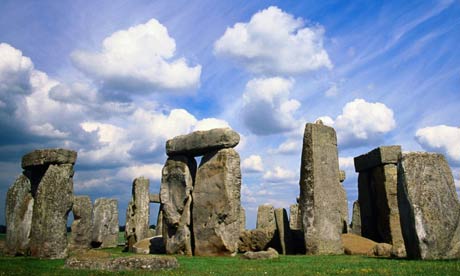
The UN is threatening to put the Tower of London on its list of world heritage sites in danger after its experts accused the UK of damaging globally significant sites such as Stonehenge, the old town of Edinburgh and the Georgian centre of Bath, the Guardian has learned.


Unesco, the UN's cultural agency, has told ministers in London and Edinburgh that it wants urgent action to protect seven world heritage sites which it claims are in danger from building developments, and said in some cases the UK is ignoring its legal obligations to protect them.

Their complaints range from decisions to approve new tower blocks in central London, such as the 66-storey "shard of glass" at London Bridge, to the failure to relocate the A344 beside Stonehenge despite promising action for 22 years, to a proposed wind farm which threatens neolithic sites on Orkney.

For all seven sites, it has asked the UK to write detailed progress reports replying to its concerns by February.

Unesco's world heritage centre in Paris is also sending two teams of inspectors to Edinburgh and Bath this winter to investigate its concerns that new buildings in both cities will damage their "integrity" and their "outstanding universal value."

In its strongest criticism, Unesco's world heritage committee has said it "deeply regrets" the decision by Edinburgh city council to press ahead with a hotel, housing and offices development called Caltongate next to the Royal Mile, despite expert evidence it will ruin the medieval old town's unique form.

In the committee's final report after its annual meeting in July in Quebec, which has just been released, it also accuses the UK of breaching world heritage site guidelines by failing to warn it in advance about the Caltongate scheme. Last month, Koichiro Matsuura, Unesco's director general, told the Scotsman there was growing concern about Edinburgh. "It is crucial that its outstanding features are preserved and protected," he said.

Leading architects and conservationists, including Sir Terry Farrell and Marcus Binney, chairman of Save Britain's Heritage, have said they share Unesco's anxieties. Farrell, appointed Edinburgh's "design champion", told the Guardian the city urgently needed a proper urban design masterplan. "I'm very supportive of Unesco's position," he said.

Binney said: "Heritage has taken a back seat to Cool Britannia and encouraging everything modern, and we're now uncomfortably in the limelight for failing to have proper policies to protect our world heritage sites, and timely criticisms are now being made."

In potentially its most serious conflict with ministers, Unesco has said it could put the Tower of London on its "world heritage in danger" list next year if ministers fail to honour promises to strengthen planning guidelines for the area.

Unesco is worried that the "iconic" Norman Tower and its 13th-century walls will be overshadowed by Renzo Piano's London Bridge tower, the so-called "shard of glass", and a 39-floor tower on Fenchurch Street in the City. It accepts that a new management plan for the area is being drafted but is angry that the new towers are still being approved.

The Department for Culture, Media and Sport, which has lead responsibility for protecting the UK's 27 world heritage sites, says it is introducing a heritage protection bill which will give all sites in England the same legal protection as a conservation area.

It said its delegation to the Quebec meeting had successfully challenged some criticism from Unesco by showing that planners were acting to draft guidelines on protecting several sites and their skylines. "The tone of the meeting was very positive and our delegates came away with a very positive feeling about the likely final outcome," it said. "Nothing has been said or received subsequently to alter this impression."

The UK overturned a proposed warning that the Palace of Westminster world heritage site, which includes the abbey and St Margaret's church, could also be added to the "in danger" list next year if Unesco's concerns were ignored, by citing the heritage protection bill and planning guidelines. But Unesco still "regrets" that the UK has failed to put in a "buffer zone" to restrict damaging developments and draw up a proper "skyline study" to allow planners to rapidly assess development proposals. It accuses the UK of a "lack of clarity" in assessing the conflicts between conservation and development.

Read the rest of this important story here...

Tuesday, September 9, 2008

Rock-solid proof?


A discovery by a former Mineral Wells resident might prove men and dino-
saurs walked the Earth together...


July 28, 2008 09:32 am
By David May
editor@mineralwellsindex.com

A slab of North Texas limestone is on track to rock the world, with its two imbedded footprints poised to make a huge impression in scientific and religious circles.

The estimated 140-pound stone was recovered in July 2000 from the bank of a creek that feeds the Paluxy River near Glen Rose, Texas, located about 53 miles south of Fort Worth. The find was made just outside Dinosaur Valley State Park, a popular destination for tourists known for its well-preserved dinosaur tracks and other fossils.

The limestone contains two distinct prints – one of a human footprint and one belonging to a dinosaur. The significance of the cement-hard fossil is that it shows the dinosaur print partially over and intersecting the human print.


In other words, the stone’s impressions indicate that the human stepped first, the dinosaur second. If proven genuine, the artifact would provide evidence that man and dinosaur roamed the Earth at the same time, according to those associated with the find and with its safekeeping. It could potentially toss out the window many commonly held scientific theories on evolution and the history of the world.

Finding scholars and experts on evolution, paleontology or creationism to speak about the discovery proved difficult. Some who were contacted said they didn’t want to comment on the prints without a personal inspection or without review of data from scientific tests.

However, Dr. Phillip Murry, a vertebrate paleontology instructor in the Geoscience department of Tarleton State University at Stephenville, Texas, stated in his response to an interview request: “There has never been a proven association of dinosaur (prints) with human footprints.”

The longtime amateur archeologist who found the fossil thinks that statement is now proven untrue.

“It is unbelievable, that’s what it is,” Alvis Delk, 72, said of what could be not only the find of a lifetime, but of mankind.

Delk is a current Stephenville and former Mineral Wells resident (1950-69) who said he found the rock eight years ago while on a hunt with a friend, James Bishop, also of Stephenville, and friend and current fiancee Elizabeth Harris.

The three were searching in July 2000 for Indian artifacts like arrowheads – Delk’s specialty as a hunter and collector since he was 6 years old – when he said a pile of rocks along a creek bank caught his eye.

“I said it looks like something has been washed out of this hole,” Delk told the Mineral Wells Index.

Upon inspection of the pile, he said he saw a dinosaur footprint embedded in a piece of limestone. Delk said he has found and seen dinosaur prints, but now he had one on a piece of rock he could carry off – with Bishop’s help – to keep and add to his collection.

Which is what he did, for nearly eight years. The stone was kept otherwise untouched, stored amongst his other finds, which he said includes over 100,000 Indian artifacts.

A domestic fall from a ladder eight months ago nearly crippled Delk, resulting in surgeries, a long recovery and expensive medical bills. He decided to try and sell some of his archeological treasurers, so he turned to the large piece of limestone, thinking he could clean it up some and sell it to the Creation Evidence Museum located adjacent to Dinosaur Valley State Park near Glen Rose.

Two months ago – about the third week of May – Delk said he grabbed a 4-inch brush and began lightly brushing away sediments and deposits from the stone when he noticed something. He began to see another print develop – that of a human – partially beneath the dinosaur print.


“I seen the (human) track coming out and (saw) that it was a man,” Delk said. “I thought to myself, ‘Lord, I’ve been shown man was here when the dinosaur was here.’”

He said he knew what he had to do.

“When I found it, I said this has to get to someone who knows it,” he said. “I took it to Dr. Baugh. He liked to have a heart attack over it. He shed some tears.”

Read the rest of the story here.

Sunday, September 7, 2008

A worthwhile effort:


Justin Brashares: Brashares Wildlife Conservation Fund


One of the things about the "World Wide Web" that I like the most is the fact that many "news" articles published stay available for quite a long time.

Of course, newspapers have always had "archives" of sorts. Often just a big cardboard box with a copy of each daily edition tossed in. The past issues of some were available, for a while, in the library, too.

Unless someone happened to know far enough ahead of time to subscribe to a "clipping service", when researching a piece of information, most of what had been written pertaining to the subject was not readily available - if not absolutely untraceable.

With the advent of the web a few years ago, we have begun to have available an almost impossibly huge archive of human (one hopes) thought pertinent to almost any inquiry.

It seems that the "information superhighway" - as it was called a few years back - has also become an "information multi-level parking structure." Which, in the long run, might prove to be more beneficial than mere rapidity of dissemination of data.


Southern California


On the negative attribute list, one must add the unreliability of a great deal of the information which one encounters.

Even so: Opinion, even if devoid of fact, is still information - that's my opinion, anyway.

Like a lot of old people, I don't go out "clubbing" much - so, I spend a lot of time reading. For the past several years my books have had a lot of competition from the internet. I don't "chat" but sometimes I am moved to comment.

Today is one of those times. This morning I saw a reference to a story which stated that there is a traffic in the meat of wild animals being smuggled into Europe and North America from Asia, Africa, and South America apparently for food.

Now, let me state from the outset: I have no knowledge - nor even an opinion - as to the veracity of the article nor of the reality of the alleged traffic.

That purported traffic is not what I'm writing about so if you're interested it can be found at Primatology.net.

What started this digression posing as an introduction, is the fact that the article was dated July 19, 2006 and the last comment - before mine - was dated August 28, 2008. Now that is persistence of a news item!

In the course of reading that article I saw a citation referring to "Justin Brashares, a professor of wildlife ecology at the University of California, Berkeley and his team."

I was curious as to who Dr. Brashares is and what kind of team was meant. So, I followed the link given: Justin Brashares and found something that I thought to be worth passing along.

What I found is a University Professor, a coterie of post-doctoral researchers, doctoral students and technicians, see: "Who We Are", who are getting beyond (way beyond) the ivy covered halls of academia and working to make a vital contribution to the world.

O.K. That's enough of my blather, now I'll let Dr. Brashares' own material tell the story.

The following information, including pictures, is taken wholly from: Dr. Brashares' websites.


(Dr.Brashares is not responsible for the captions)

Research Summary


The catastrophic global decline of biodiversity is widely recognized as among the most pressing problems we face as a society. The biological, economic and social consequences of depauperate oceans, tundras, savannas and forests remain unclear and in desperate need of study. My research attempts to understand how our consumption of wild animals and conversion of natural habitats affects the dynamics of animal communities and the persistence of populations. Work in my group extends beyond traditional animal conservation to consider the economic, political and cultural factors that drive and, in turn, are driven by, changes in wildlife abundance and diversity. Through these efforts, my group strives to propose empirically-based, interdisciplinary strategies for biodiversity conservation. Much of this work and, specifically, my research efforts in ESPM can be placed within three foci:


* Community and population ecology of wildlife in altered ecosystems
* Causes and ecological consequences of wildlife utilization
* Landscape planning and monitoring for wildlife conservation


Click on a picture for a larger image


California


Kids in Cameroon


Zebras in the dust


Laundry day: wash hung to dry


Two gentlemen and some cattle

University website:
UC Berkeley College of Natural Resources


Vancouver Is., B.C.


Carrizo Plain


Baboons in Ghana


Nap Time

Visit Dr.Brashares' Website